
The Beni Hasan Wrestlers
Egypt's 4,000-year-old wrestling manual. Painted on Egyptian tomb walls about 4,000 years ago, the Beni Hasan wrestlers show holds and throws that any modern grappler would recognize.
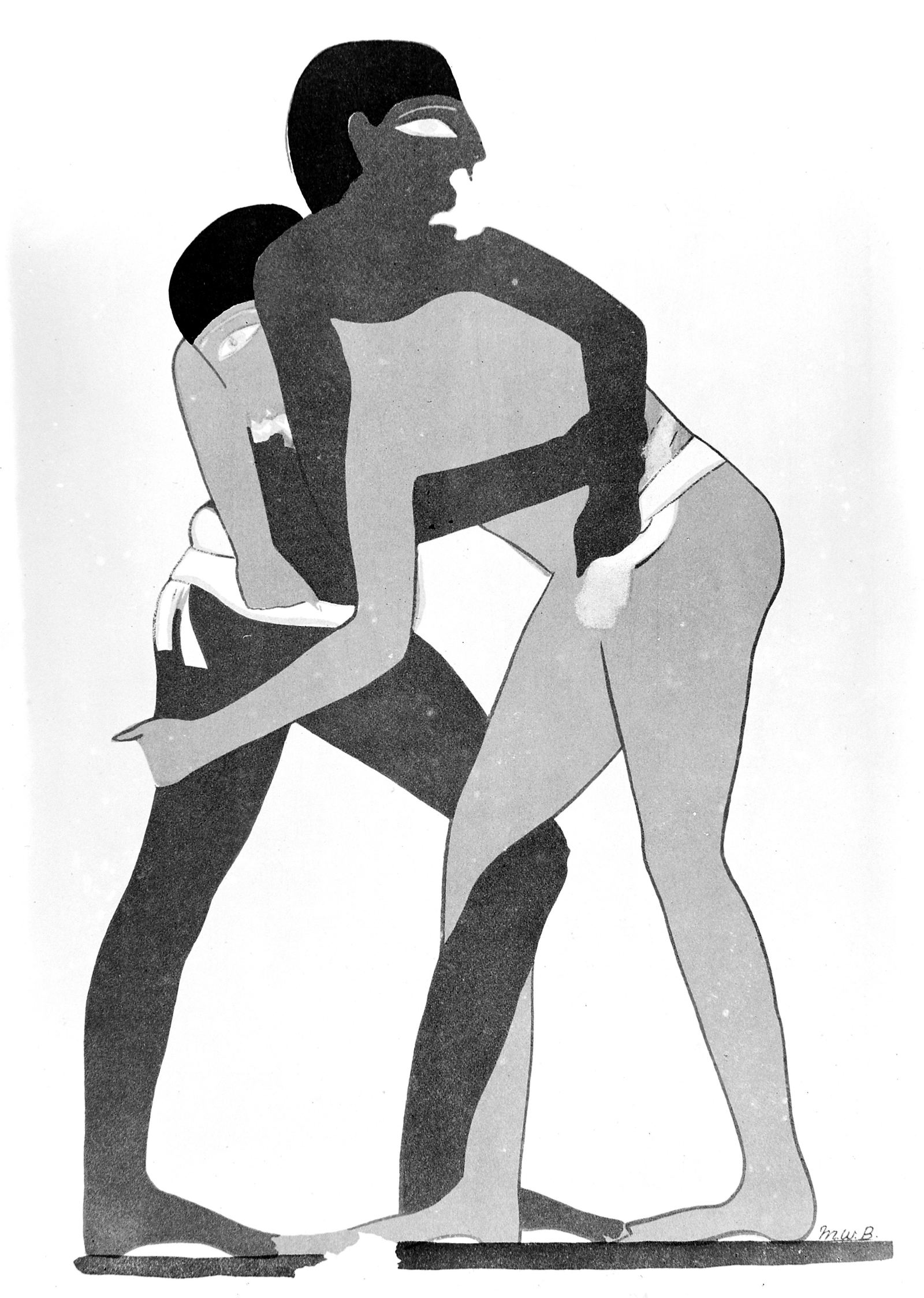
Wrestlers on the east wall of tomb 15, Beni Hasan: Wellcome Collection, CC BY 4.0
A comic strip carved into a cliff
On the east bank of the Nile, a little south of the modern city of Minya, a row of tombs is cut into a limestone cliff at a place called Beni Hasan. They belonged to regional governors and officials of the Middle Kingdom, about 4,000 years ago. Inside, alongside scenes of farming, hunting and warfare, the walls are covered with something unexpected: wrestlers, pair after pair, grappling across the plaster in long horizontal bands.
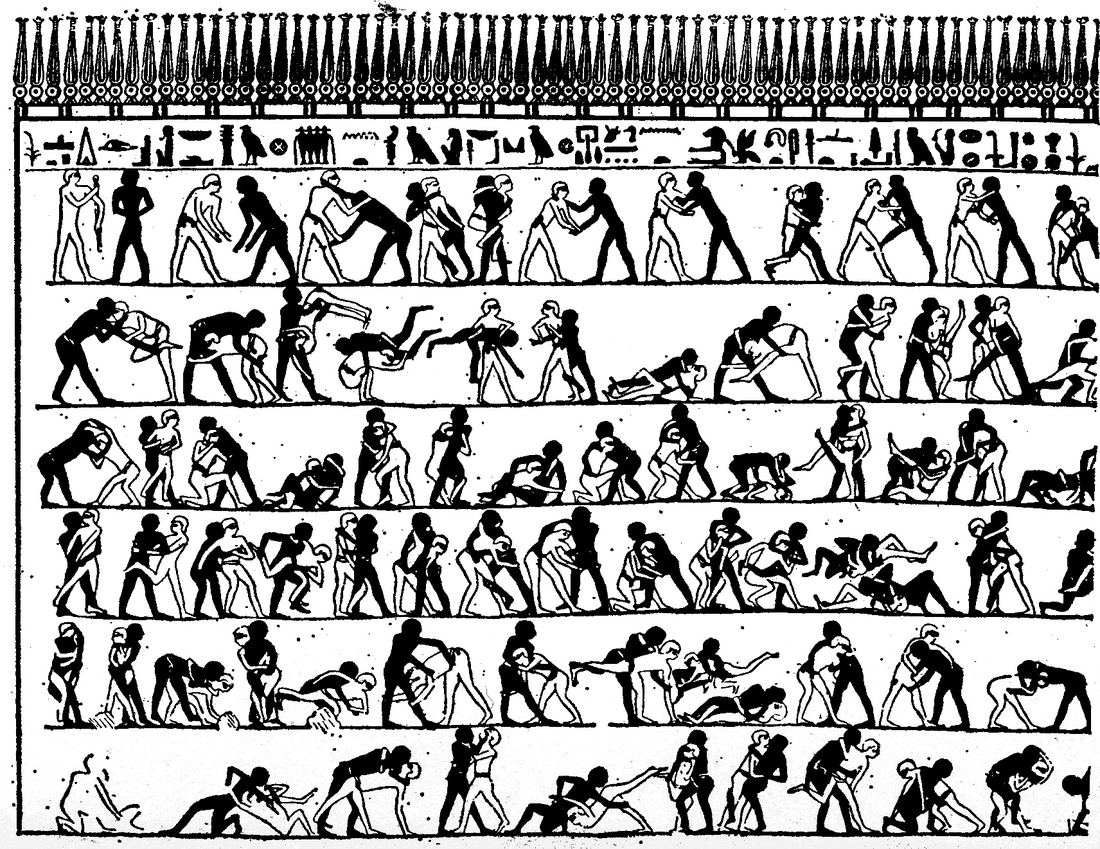
The most famous sequence sits in tomb 15, made for Baqet III, a governor of the local province, with similar scenes in neighboring tombs such as those of Khety and Amenemhat. Tomb 15 alone shows about 220 pairs, each one a frozen moment of a match. Read left to right, the pairs flow from one position into the next, so the wall works almost like a flip book or an instruction manual.
Wrestling moves were painted on tomb walls 4,000 years ago
Tomb paintings at Beni Hasan in Egypt, about 4,000 years old, show hundreds of wrestling holds; wrestling joined the ancient Olympics in 708 BC.
YouTube @EntertainmentWrestlingWorld (launching soon). Photos in this Short: Egypt, Group of wrestlers from tomb 15 at Beni Hasan. Wellcome M0006217.jpg - see file page (CC BY 4.0) via Wikimedia Commons | Heptanomide. Beny Hasan (Beni Hasan). Bas-relief et peintures de divers hypogées (NYPL b14212718-1268161).jpg - Impr. impériale (Public domain) via Wikimedia Commons | Beni hasan tomb of khety.jpg - Udimu (CC BY-SA 4.0) via Wikimedia Commons | Egypt east wall of tomb 2 at Beni Hasan. Wellcome M0006213.jpg - see file page (CC BY 4.0) via Wikimedia Commons | -Ancient Gree
Holds a modern grappler would know
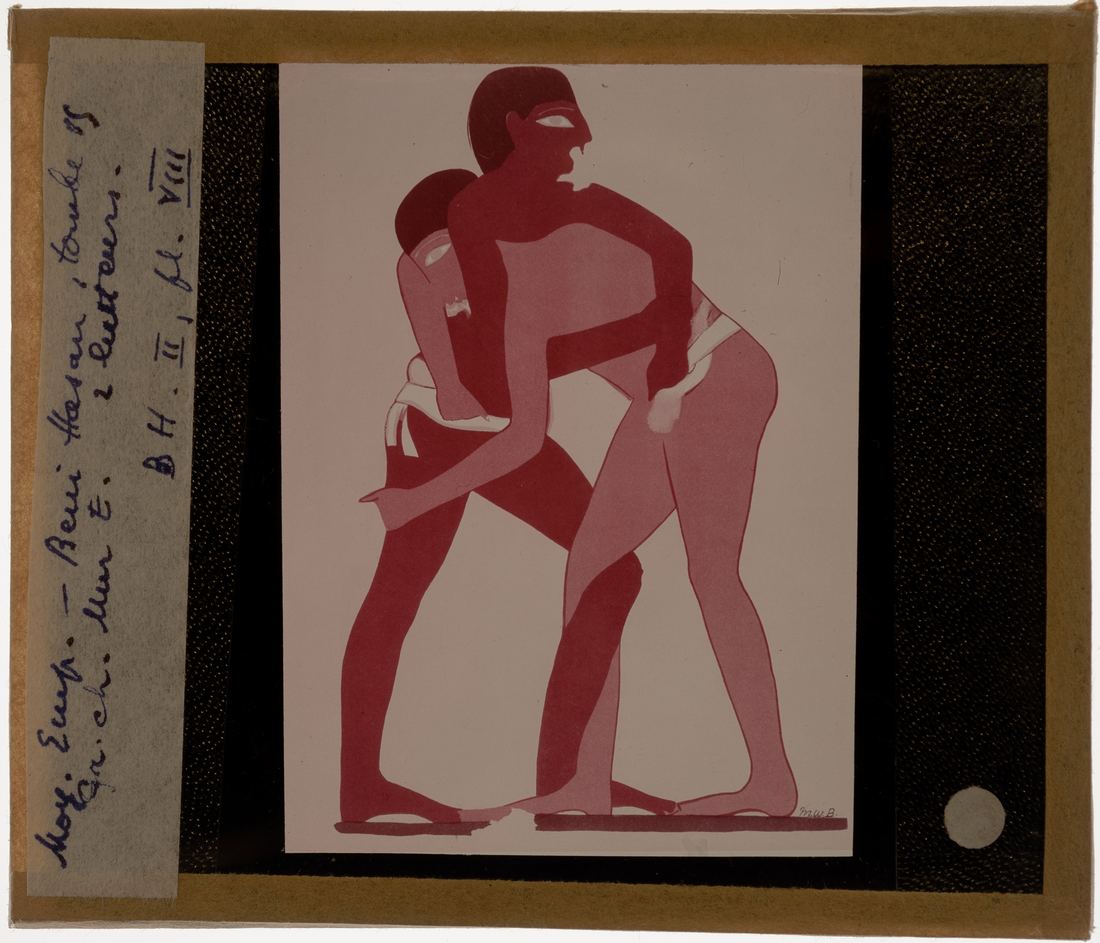
What makes Beni Hasan so striking is how familiar the action looks. Wrestlers reach for the legs, lift opponents off the ground, trap arms, work for headlocks and drive each other toward the floor. Artists often painted one man in a darker tone and his opponent in a lighter one, so a viewer could follow which arms and legs belonged to whom in a tangle of limbs.
Coaches and historians who study the images have matched many of them to techniques still taught in amateur and folk wrestling today. The scenes suggest a sport with recognized moves and a teaching tradition, not just random brawling.
Why wrestling was on a tomb wall
Egyptian tombs were meant to show the life and status of the person buried there. Military training scenes appear near the wrestlers, and many scholars connect the grappling panels to the preparation of soldiers. Showing trained fighters was a way to show an official's power and the strength of the forces he could command.
Wrestling also turns up in other Egyptian art, and in later cultures all around the Mediterranean, from Greek vase paintings to Roman mosaics. Beni Hasan stands out for its sheer scale and its step-by-step detail.
The deep roots of a modern spectacle
Professional wrestling as a scripted show is a product of the late 1800s and 1900s, but the urge to watch two people grapple for victory is ancient. When fans today trade arguments about the best suplex, they are part of a conversation that stretches back to painters working by lamplight inside a cliff in Middle Egypt.
Visitors can still see the paintings today, though centuries of weathering and early damage have faded many colors. Much of what we know in fine detail comes from careful copies made by expeditions in the 19th century, when artists traced the walls by hand. Those copies let historians study each pair of wrestlers move by move.
- Wikipedia: Beni Hasan
- Wikimedia Commons: Wrestling scene, tomb of Baqt at Beni Hasan
- Wellcome Collection via Wikimedia Commons: Group of wrestlers from tomb 15 at Beni Hasan
Facts on this page were checked against these sources.
- Wrestlers on the east wall of tomb 15, Beni Hasan: Wellcome Collection, CC BY 4.0
- Two wrestlers, facsimile from the tomb of Baqet III: Unknown author, Public domain
- A 19th century copy of the wrestling sequence: Unknown author, Public domain
- Short photos: Egypt, Group of wrestlers from tomb 15 at Beni Hasan. Wellcome M0006217.jpg - see file page (CC BY 4.0) via Wikimedia Commons | Heptanomide. Beny Hasan (Beni Hasan). Bas-relief et peintures de divers hypogées (NYPL b14212718-1268161).jpg - Impr. impériale (Public domain) via Wikimedia Commons | Beni hasan tomb of khety.jpg - Udimu (CC BY-SA 4.0) via Wikimedia Commons | Egypt east wall of tomb 2 at Beni Hasan. Wellcome M0006213.jpg - see file page (CC BY 4.0) via Wikimedia Commons | -Ancient Greek Bronze Statue of Wrestlers, 3rd c. BC (Louvre, MNE 60) (28300945455).jpg - Gary Todd from Xinzheng, China (CC0) via Wikimedia Commons | Greek - Wrestlers - Walters 54742.jpg - Anonymous (Greece)Unknown author (Public domain) via Wikimedia Commons | Pseudo-Panathenaic amphora - wrestlers (Madrid MAN 32647).jpg - Mark Landon (CC BY 4.0) via Wikimedia Commons | Neck Amphora, possibly Chiusi Painter, Greek, Attica, c. 50-500 BC, Side A (Herakles and Triton), Side B (Herakles and Apollo wrestling for Delphic tripod), ceramic, black figure - Chazen Museum of Art - DSC02683.JPG - Daderot (CC0) via Wikimedia Commons
Text written by Entertainment Wrestling World.
← The Steel Cage MatchCatch Wrestling and the Athletic Shows →






,_GD005162.jpg)